Hidden Fingerprinting - Hard to Measure Gradle Task Cost
Let’s say you have a simple task that prints out current git commit:
abstract class MyTask : DefaultTask() {
    @get:Input abstract val gitSha: Property<String>
    @TaskAction fun doThings() {
        println(gitSha.get())
    }
}
and the use ValueSource as a mechanism to provide this value:
internal abstract class GitHeadShaSource : ValueSource<String, GitHeadShaSource.Parameters> {
    interface Parameters : ValueSourceParameters { val workingDir: DirectoryProperty }
    @get:Inject abstract val execOperations: ExecOperations
    override fun obtain(): String {
        val output = ByteArrayOutputStream()
        execOperations.exec {
            commandLine("git", "rev-parse", "HEAD")
            standardOutput = output
            workingDir = parameters.workingDir.get().asFile
        }
        return String(output.toByteArray(), Charset.defaultCharset()).trim()
    }
}
finally wiring this task like:
tasks.register("myTask", MyTask::class.java) {
    gitSha.set(
        providers.of(GitHeadShaSource::class.java) {
            parameters.workingDir.set(project.rootDir)
        }
    )
}
This post was inspired by my investigation of an almost identical setup in AndroidX has for generating some per project metadata files. I was seeing an unexpectedly high duration for something that should only take milliseconds.
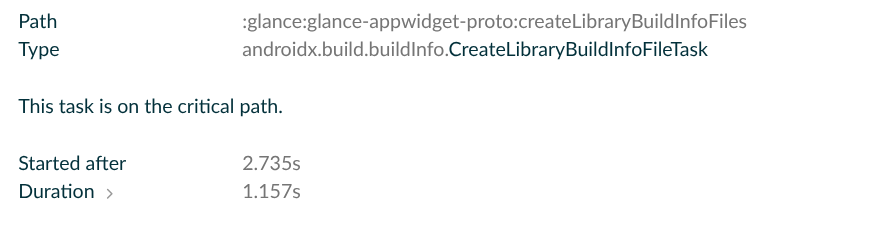
Measuring @TaskAction time was only making milliseconds as expected, however the duration was >1 second when running
many instances of this task across different projects at the same time. The breakthrough was to see that the build scan
was showing a very high “fingerprinting inputs” time:

Fingerprinting inputs step is the step where Gradle serially checks what is the current value of each task input.
This means executing the ValueSource.obtain() methods to know whether a task is up to. If you call that on hundreds of
individual provider instances for each project that produces a huge I/O pressure as git tries to return the commit SHA.
Note: this step happens every time you run that task in Gradle, even when you have a configuration cache hit.
The key is that Gradle does this work for each instance of a provider, so if a provider is shared, it only needs to run it once. For example, if you have multiple tasks within the same project, you can do the following:
val gitShaProvider = providers.of(GitHeadShaSource::class.java) {
    parameters.workingDir.set(project.rootDir)
}

tasks.register("myTask1", MyTask::class.java) {
    gitSha.set(gitShaProvider)
}
tasks.register("myTask2", MyTask::class.java) {
    gitSha.set(gitShaProvider)
}
This will only run obtain() once when trying to run both tasks.
If you need something shared across multiple projects, you can use BuildService:
abstract class SharedProviderService : BuildService<SharedProviderService.Parameters> {
    interface Parameters : BuildServiceParameters {
        var gitShaProvider: Provider<String>
    }
    fun getGitShaProvider(): Provider<String> = parameters.gitShaProvider
    companion object {
        internal fun registerOrGet(project: Project): SharedProviderService {
            return project.gradle.sharedServices.registerIfAbsent(
                "sharedProviderService",
                SharedProviderService::class.java,
            ) { spec ->
                spec.parameters.gitShaProvider = project.providers.of(GitHeadShaSource::class.java) {
                    parameters.workingDir.set(project.rootDir)
                }
            }.get()
        }
    }
}
Then you can do:
val gitShaProvider = SharedProviderService.registerOrGet(project).getGitShaProvider()
tasks.register("myTask1", MyTask::class.java) {
    gitSha.set(gitShaProvider)
}
In androidx case, this sped up ./gradlew createLibraryBuildInfoFiles by 24x (3.45s -> 0.14s).
Happy provider sharing!